
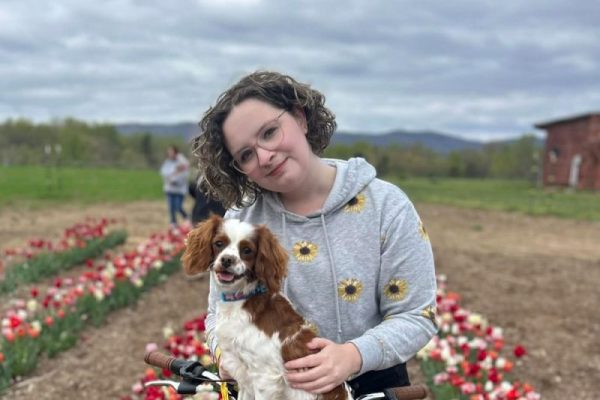
By Abigail Degnan
When I think back to where my journey of deconstruction and reconstruction began, one memory stands out.
At sixteen years old – four years before I became an intern at a biblical counseling crisis center that would religiously abuse me – I asked my brother to meet with me for lunch at a diner.
It never took much for me to spill my guts to my brother, and when he asked me over our meal why I wanted to get together, it sent me on a whirlwind of venting about my doubts about God. I kept saying that I was a Christian, that I was just upset and have these doubts, but that I was still a Christian.
“Well, what are some of your doubts?” he asked.
It felt like a shining moment—the first time someone had just flat out asked what my doubts were. I had never voiced them before, or at least not directly. I had envisioned this moment perfectly, where I could stump a mature Christian with my questions. I explained to him that I didn’t understand why we needed to have an explanation for creation if we don’t need an explanation for where God came from. I explained that it just doesn’t make sense for God to exist and that I know we had to come from somewhere, but why does our innate need to know where we come from stop there? Why don’t we need to know where God Himself came from? Why do we need an origin but God doesn’t? Why had I sought God my entire life but never felt Him or seen His love? Why does it feel like Jesus is supposed to give us freedom, but when I tried to follow Him, I felt like my autonomy was at its lowest? Why did these things matter so much to me and not to other people?
I rambled and cried about why I wasn’t sure God was real.
“What does the Gospel mean to you, Abby?” My brother asked me next.
To be honest, I didn’t know what to say, so I ended up saying, “It’s about how God sent His Son to die for us on the cross so we can have salvation and go to Heaven.”
My brother explained that I had a very textbook answer. He said that to him the Gospel is about his need for a Savior. That he needs Jesus. He went on to explain that he has a wife, a great job, a baby on the way — he’s a very successful man, but none of it would mean anything if he didn’t have Christ.
I don’t remember what I said in return; in fact, there is only one more part of that conversation I actually remember, and it stuck with me much more than any sermon or lecture I had received.
“Abby,” he said. “I could give you every logical or scientific explanation in the world for why God exists — because there’s proof, there’s lots of proof — but none of that would matter to you unless you just have faith.”
And there it was. Faith. He was right, of course. I knew every logical explanation already; I knew the ins and outs of theology, and I knew everything there was to know in order to defend God to the ends of the earth. But none of it mattered because I didn’t have faith. It was that simple.
Finding the blank slate
That moment with my brother in the diner is what I think back to as the beginning of my deconstruction journey after growing up submerged in Christian culture. It started with the courage to voice my questions in that diner, and three years later, I finally admitted to my parents that I was not a Christian. Nineteen years of faking it had caught up to me, and I was tired of living a lie and pretending I was some perfect, godly, good girl.
But I so desperately wanted to be a Christian. I wanted to believe. Sometimes I wished that God would give me a blank slate, where I would remember nothing that had been told to me about God or the Bible or religion or Christianity. A blank slate – where I could start fresh based on what I believe, not what everyone tells me to.
But a blank slate wasn’t in the cards for me yet, and my desire to have faith is what pushed me forward at 20 years old to dive head first into a biblical counseling internship at a residential ministry facility in Lafayette, Indiana, where I would volunteer a year of my life, 40 hours a week, unpaid, in exchange for free meals and housing. I thought if I immersed myself in Christian ministry (even though I had just graduated from a Christian college), maybe something would finally click. Maybe if I just served God better, He would finally speak to me.

I couldn’t have been more wrong. What ensued was a chaotic chain of manipulation, brain wash, twisting of Scripture, neglect, and trauma – all done under the disguise of “serving the Lord.” As an intern, my job was to supervise the residents who were there for a variety of issues, including depression, self-harm, eating disorders, unplanned pregnancies, addiction, and more. But every resident had intense trauma, and most had life-dominating mental disabilities or disorders, and I had no training on how to help them; the only training I received was to ask them what Bible verse they learned about in counseling that week (counseling that did not use trauma-informed or psychology based practices). And the culture and rules of the ministry fostered a controlling, shame-based environment that oppressed those who were part of it and forced an impossible standard of perfection that only set us up for failure. (Hear more about this ministry on a Sons of Patriarchy podcast episode).
During the middle of my internship, an intern went on behalf of us to tell the leadership we felt oppressed, to tell them we wanted a change. Instead of being met with understanding, she was accused of gossiping and being in “dirty, rotten sin.” Was I in dirty, rotten sin for feeling mistreated by this ministry? Was I wrong for wanting to leave?
Whenever someone asked me how the internship was going, I’d tell them “great; lifechanging,” but in reality I was crying my eyes out every night because all I wanted was my mom and dad, who were miles away in Long Island, NY, while I was stuck in Lafayette, IN. I wanted to leave, but I was so scared that the ministry would accuse me of “rebellion” against them and not let me continue talking with my fellow interns and residents. That was the pattern of those who leave the ministry on bad terms; they are “leaving in rebellion” towards God and the ministry staff, and those within the ministry are forbidden from associating and talking with the rebels. One intern during my time was dismissed because she disagreed with the director’s COVID policies, and we were not allowed to speak with her after she left. Another intern was threatened with isolation for a simple misunderstanding between her and staff. And another intern was forced to write an essay on how she was a selfish and inconsiderate roommate, who was not serving Christ well, because she forgot one of her chores. The list could go on.
At that point, my fellow interns and residents were some of my only friends and relationships outside of my family. I was scared to leave and not be there for my friends who were still under the oppression of the ministry’s leadership.
I remember sitting in the intern coordinator’s office during the last month of my time there, tears streaming down my face, and telling her I felt so oppressed there that I wanted to kill myself. She told me to meditate on a Bible verse, and then sent me back onto shift to assist other mentally ill women that I was not in a mental state to be helping.
I remember breaking down in a car one night with the guy I was seeing, sobbing that I was going to kill myself and I was scared to go back home to the ministry. He called my parents who immediately arranged for me to leave the ministry because of “medical problems.” They called the intern coordinator and spoke to her themselves. “Medical problems” was a worthy and valid excuse that created a tunnel for me to get out without being labeled as a rebel against the ministry.
I left that ministry suicidal, struggling with an eating disorder, and I decided that I was done with Christianity. I didn’t know if God existed, but I didn’t care if He did. I didn’t want to have faith in something that seemed so deeply hurtful not just to me but to people I love and care about.
And it was then that I arrived at the blank slate I had wished for five years previously. For the first time, I believed in nothing. In fact, I believed so whole-heartedly in nothing that I blocked out everything I knew about the Bible and theology. If someone asked me what I believed, I would tell them I was “mostly” agnostic. I would say “mostly” because I felt ashamed to not believe in God.
Therapy and psychiatry helped immensely with recovering from the religious trauma and abuse, and it helped with getting me to a place of mental stability. But there was still something missing from my life: hope. And because I had no hope, my life spiraled for a couple years after leaving the ministry, where I made bad choice after bad choice. There were times when I was drunk almost every night and high throughout most of the day.
Since I pushed God out of my life all together and I had that blank slate, for the first time I was living for myself instead of for some greater being I didn’t believe in. And while living for myself was fun at times, I was always left with the underlying feeling of having no purpose. And I desperately wanted a purpose.
From deconstruction to reconstruction
It was during grad school that I ended up moving in with a couple Christian girls. And despite the very “ungodly” lifestyle I was living, they never once judged me, rebuked me, scolded me, or told me I was in sin. Instead, they lived alongside me, they listened to my stories about the ministry that had mistreated me, and they grieved with me. And when I wasn’t watching, they were praying for me, too.
Something about their love was so different from what I had experienced at the ministry. It reminded me of the love from my family; a love that I had almost forgotten about from the bitterness and anger I harbored towards Christians. My roommates’ love was gentle, persistent, and understanding. Not one part of it was judgmental or condemning. And because of that, I listened better when they spoke about their faith, and I became curious to ask more questions about it.

During this time, I also wrote a master’s thesis that was a memoir about my time at the ministry and my journey after leaving it. Writing it helped me process through every difficult memory, and it helped me realize a common thread throughout every chapter of the book: I was never searching for freedom from religion; I was searching for freedom from myself. My entire life I was always searching, wandering, and running around trying to find evidence or solutions for my doubts. But a conversation with my roommate one night made me realize that I was the only one holding myself back from having faith.
My roommate and I had been parked in a restaurant parking lot after getting dinner, and randomly, she asked me the same question my brother asked me in a diner all those years ago. Except now, I was not just a doubting 16 year old girl. I was an adult woman who had been harmed at the hands of a church, and I had 6 years of deconstruction to look back on. My journey came full circle.
“Abby, what does the Gospel mean to you?” she said.
I remember my answer to my brother not being “good enough” (in my eyes), so I decided to just repeat what he told me: that the Gospel means I need a Savior. I don’t think I said it with much conviction. But my roommate then told me what the Gospel means to her, and I don’t remember the particulars of what she said, but her words were passionate, open, genuine, and detailed in how the Gospel starts at the beginning of time and travels all the way through to Jesus’ death and resurrection and to the very end of the Bible. I had heard it a million times before, but something in the way she said it was so different. Like, she actually believed the words she was saying, just like my brother, and she wasn’t just repeating them because she had to. Her words were different than what my brother said, but they held the same conviction and love. I realized that their faiths were personal to them.
As she spoke, tears poured down her cheeks, and she took my hands and told me how sorry she was for the way Christ had been reflected to me. She wasn’t telling me to repent and turn back to God. She just wanted to listen and to grieve with me. And when I told her I felt like I had to be perfect to believe in God, she told me that I don’t need to be perfect like the ministry caused me to believe, and that I didn’t need to have my life in order before having a relationship with God, and that I didn’t need to be rid of my doubts to know God; it’s all about faith.
Faith. And then it clicked.
“None of it would matter, Abby, unless you just have faith.” My brother’s words from six years previously rang in my ears.
But of course, it’s not that simple. I did decide right then and there to have faith, but I didn’t call myself a Christian just yet, and it took almost another two years for true transformation to take place and for me to truly feel God’s presence for the first time. I began intentionally praying, even if I felt like I was just talking to thin air. I started going to church again, and I church hopped for over a year. There were days I wouldn’t leave my living room couch because of how depressed and confused I was, and how talking to God and attending church just made all my bad memories of the ministry arise and reminded me of the things I hated about Christian culture growing up. I couldn’t sit in a church without panicking and tears brimming my eyelids. And I still couldn’t open a Bible without burning anger surging through me.
But I gave myself grace to feel spirituality in any way I wanted, and that’s when I shifted from being “mostly agnostic” to “sort of spiritual.” I started to enjoy communing with nature, seeking to understand the energies and meaning the universe gives off. And it was as I immersed myself in understanding the universe, that I began to see God in everything I observed. Even in the trees, and how they die in the beginning of autumn, yet come back to life in spring. Or in all the small, good things I experienced in life, like the smiles of my nephews and nieces, a daily phone call with my mom, a comforting morning cup of coffee, the way a stranger might smile at me as we walk past each other, or how my dad would buy meals for homeless individuals and sit and talk with them for hours.
I found God’s love hiding in the small things – the joyful things that got so buried under the weight of the world, and brokenness, and false portraits of Christ.
It was during this time, after over a year of church hopping, that I found a small house church of less than 20 people that were so intentional and loving in their pursuit of God and of me. I began to see that not all Christians were bad, and maybe there were others outside of my family that did truly reflect Christ well. One of the church’s members met with me for coffee several times, and it was with her that I opened a Bible willingly for the first time in years. And when we read it, she didn’t preach to me about what it meant or how I should interpret it. She asked me what I thought about it myself.
But though I was starting to understand faith better, and I was dedicated to having faith, I still struggled with God’s existence. During a worship night at a coffee shop, hosted by my small house church, I prayed God would show Himself to me in some undeniable way during that worship service. I prayed that specific word: undeniable. I told God if He did that, I’d turn over everything to Him. I’d surrender, if only He would show Himself to me undeniably. I must have prayed and begged God for an hour and a half straight as the band continued playing music, but nothing “undeniable” happened. I left disappointed, and wondering if I was destined to pursue something for the rest of my life that would never feel real.
But then something did happen. Less than a week later, God showed His power in my life in so many incredible ways, including intervening in a toxic relationship and making my path straight for where I needed to go in life. I remember I was driving home from work one day, and as I thought about the many ways God showed up that week, I could only think of one word.
Undeniable.
God, you are undeniable.
At the time, I forgot that I prayed that prayer a week previously, but the word resounded in my mind like wedding bells. This was undeniable. And the moment I thought that word, the most indescribable feeling of joy came over me, better than any high or drunken moment I’d experienced. I felt like light was bursting out of me, and I was so overcome with emotion that I just started sobbing in my car – not out of sadness or grief, but out of pure, uncontainable joy. There was no one around me, and there was no one watching; it was just me and God in the front seat of my Nissan Sentra. Many might call it a moment when the Holy Spirit entered them. And maybe that’s what it was for me, but whatever you want to call it, I know God was there. The 20+ years of doubting, of confusion, of tears, of anger, and of strife all became worth it for that one moment where I had never before felt God’s presence so clearly. Some of the questions I had at 16 years old were still unanswered, but they didn’t matter anymore. I finally had faith – and my faith was stronger than my questions.
The purpose in the pain
After that day, the Bible became life-giving to me. I no longer viewed it as a weapon or abusive, but I felt eager to read it and understand it for myself. And because I was reading it for the first time for me, not because someone was telling me to, there was always something that stood out to me as significant, even though I had read the entire Bible before and have a degree in theology. I dissected passages on my own and came to my own conclusions about theology and morals. I felt exhilarated every time I read a passage and suddenly understood what it meant, and how it differed from what I was previously taught. I returned to some of the good I was taught from my childhood with my family, and I built my own unique beliefs off of that foundation.
I also was suddenly talking to God all the time, even in random moments that maybe wouldn’t even be considered prayer – I would just start talking to God, and it became easy. I didn’t feel like I was talking to thin air anymore.
I turned away from depending on the habits I had formed during my spiral. And while I certainly don’t walk around every day with that same energy and light I felt from that moment in the car, there’s remnants of that feeling that haven’t left me. Something I feel physically every day. It’s those remnants that keep me going. I’m still growing, and I’m still learning.
What happened in that ministry I was part of was awful, and there’s no excuse for it, and nobody should ever endure abuse – especially not by the hands of people who claim to follow Christ. But I am so grateful that God didn’t leave my story unfinished. He took that part of my life and used it to bring me to a blank slate, so I could start over and rebuild. He used for good what the enemy meant for evil. My faith emerged from the fire and hail of false teachers and church trauma, and because of the fire, it glowed brightly with a unique, personal understanding of the world, of God, of Christianity, and of people.
I’m well aware not everyone has a story like mine, where they come to a true relationship with God after religious abuse. And that’s okay. I’m also well aware that many go through trials and abuse far worse and far more painful than mine, and my heart grieves for them. I’ve realized that everyone must move forward on their own journey to reconstruct their beliefs, and I will support and encourage anybody brave enough to embark on that journey, even if they don’t end up believing in God at the end. I will fight alongside victims and survivors to seek justice for the wrongs that are committed within Christian communities and to advocate for accountability and love that accurately reflects Christ’s heart.
Since I know now what God’s love truly looks like, I know that my life purpose is to love, and I’m called to show others that God’s love never runs out, and it’s not something that is ever taken away. And while that ministry I was part of fostered an environment that made us believe God’s love was conditional on our actions and perfection, I get excited to tell people that God’s love and sacrifice was given to us solely because of how broken we are – not because of any perfection we can attain. It’s okay to be broken. I’m learning how to embrace my cracks and flaws and see the ways that God’s love fills them in.
One day, I see myself in full-time work with religious abuse survivors. I’m working on expanding my master’s thesis into a full-length memoir novel about not only my experience with religious abuse but my journey of recovery and reconstruction. I hope others can read it and learn even an ounce of what I learned in the process of writing it.
For now though, I remain trying to faithfully serve the community and people around me that need support, especially those who have been scarred by false teachers, high control religion, and toxic church practices.
People are not God, as much as some may try or want to be. And it’s in realizing people are not God that I discovered who He really is. And once I saw God for myself, my faith became undeniable.

If you have experienced religious abuse, or are on the journey of deconstruction or reconstruction, Hope Restored offers regularly updated resources, support communities and book clubs, art & expressions, and peer specialists to walk alongside your journey. Contact Hope Restored today to find out more.


Leave a Reply