
By Rachel Longshore
Purity Culture
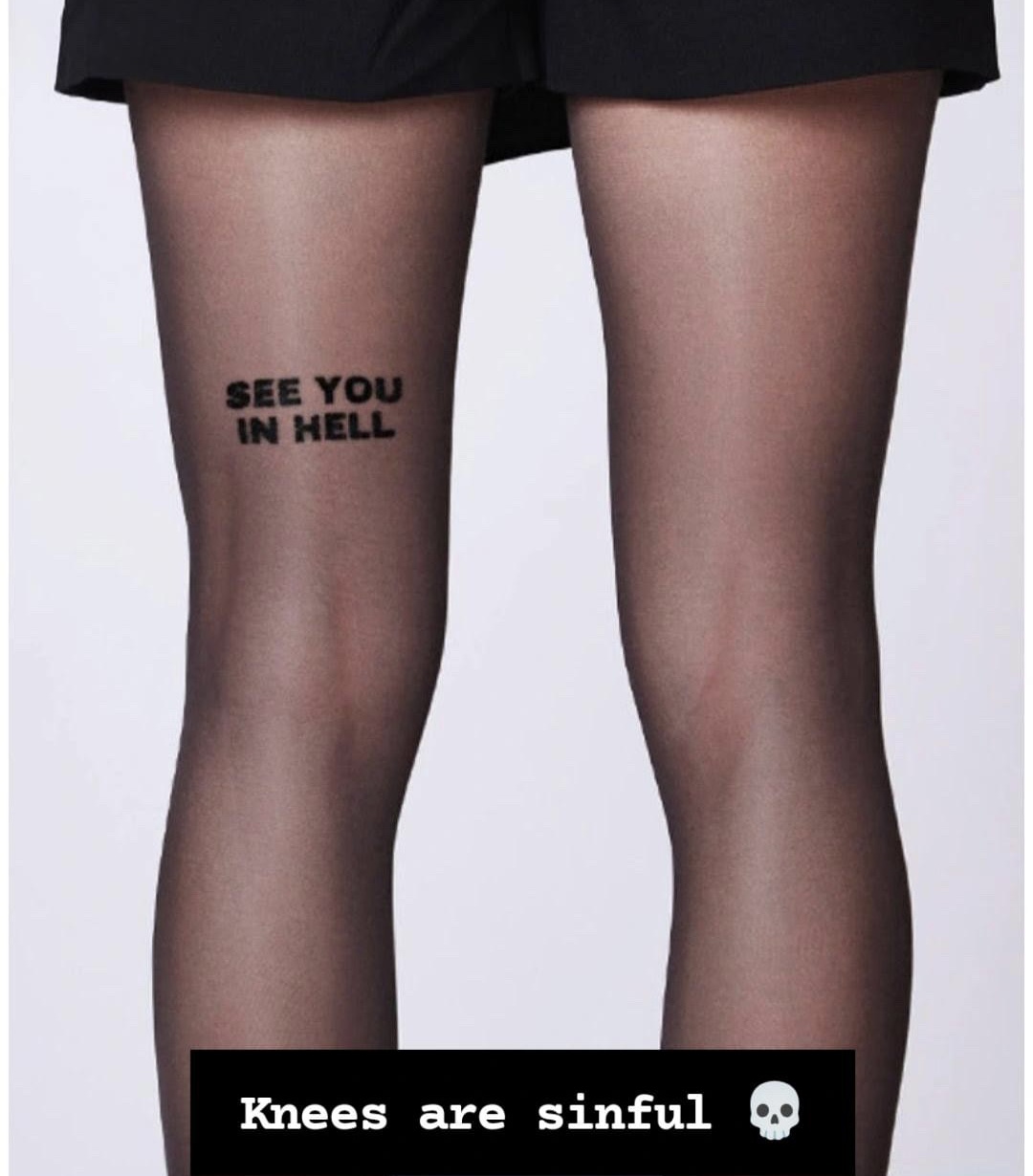
Purity culture begins and ends by projecting the idea that a person’s worth is directly connected to their sexual purity. According to Julianna Strati, “Purity culture taught young people, especially young women, to avoid sexual ‘scandal.’ Many people were told that their value was tied to their virginity. This pressured women to stay ‘pure’ for their future husbands.” (Purity Culture and Sexual Shame: A Closer Look).
In her book, When Religion Hurts You, Dr. Laura Anderson says the following about purity culture in Christian circles:
(Purity culture) expects women to be the gatekeepers of men’s purity of mind, heart, and body so that they do not sin. Women are taught that their bodies are dangerous; men are taught that their minds are. Research has found that the messages of purity culture replicate messages of rape culture in that both focus on traditional gender roles, deny bodily autonomy (especially for women), are dehumanizing, are objectifying, put the responsibility on women to safeguard men’s thoughts, lack consent, and blur lines between sexual sins (e.g., premarital sex) and rape” (When Religion Hurts You, pg 55).
Purity culture inadvertently tells us that anyone who has had sex, consensual or not, is dirty and shameful. In purity culture’s view, a woman must be pure and if she is not for any reason, she is treated as dirty, contaminated, and spoiled goods. Whether a person was sexually abused as a baby or if they consensually had sex with someone as an adult, one message is clear: sex is dirty and shameful. Churches rarely, if ever, talk about sex. If it is discussed, it is usually in youth groups where illustrations are shared that provide the idea that sex is dirty and awful and shouldn’t be discussed (we’ll be talking about some of these illustrations later).
Podcaster, writer, and advocate Karen Alea explains how purity culture impacts self-image and internalizes shame:
Much of that internalizing happened in the church. Church youth groups instilled the image of the dirty, damaged non-virgin by playing lighthearted games in which kids drank water from a cup, swished it around and spat it back, then handed the cup to the next person until it held a cloud of backwash. That swill was supposed to represent sexually active, “ruined” women. Other times youth groups compared non-virgin young women to a chewed piece of gum nobody wanted. (Women’s Bodies Are Bearing the Brunt of Purity Culture, Karen Alea).
In Christian circles, it is taught that men need sex and women must always give them sex. It is taught that if a woman ever refuses sex from her husband, she is disobeying God. Christians are taught that it is a wife’s “duty” to her husband and is how she glorifies God in marriage.
Alea also gives insight on this by recounting one woman’s experience in Christian circles of learning about sex:
“Men need to be sexually satisfied, minimally once every 72 hours; after that they start to get sexually frustrated.” That academic tidbit came from Alyssa’s college class “Psychology of Marriage and Family” at Liberty University, where she learned to be a satisfactory wife and mother with evangelical values. She’d learned this same lesson through her upbringing in a Southern Baptist household in Virginia that also dipped its toe into more fundamentalist teachings. What she wasn’t taught was that burning during sex could be the result of vaginal tearing—tearing that would swell then heal thicker into a bump that would be retraumatized each time she had sex with her husband. Every 72 hours, give or take.
Alyssa, who requested to go by her first name only, wasn’t taught how to understand her own body, only how to preserve its purity before she married. As she explained it to me, ‘Just keep your tatas covered and your legs closed, lest you be a complete slut’” (Women’s Bodies Are Bearing the Brunt of Purity Culture).
What Alea recounts is an unhealthy view of sex that threads itself through many Christian marriages, and this unhealthy view begins as children, where purity and shame are drilled into individuals at a young age.
Purity as a Teen
My youth pastor, when I was 12, used an illustration of eating a donut in comparison to sex. He showed how the closer and closer you get to the “donut,” the more you will be tempted and eventually give in to temptation. He showed this by saying he would just smell the donut. Then he would just lick it, but not eat it. Then he would rub his face all over the donut, but he didn’t eat it yet. Eventually, he gave in and devoured the disgusting jelly donut, stuffing every last bit into his mouth in about 5 seconds.
This illustration led to everyone in the youth group being traumatized by jelly donuts (to this day I will not eat jelly donuts), and all of us believing sex is distrusting like the illustration.
But the messages of purity culture didn’t end at youth group. In fact, purity culture made its way into my home and family.
When I was about 12, I went on a weekend retreat with my mother. During my time growing up, there were a lot of Christian homeschoolers who had a certain booklet and methods of teaching teens about sex. My Christian homeschool friends all seemed to have gone on this retreat, learned about sex, and gotten a purity ring. My friends talked about sex, but I felt like I wasn’t supposed to know about it until I had done this special-weekend-sex-talk-thing with my mother.
Eventually, my mother and I planned the weekend and had the sex talk. I remember pretending I didn’t know anything about sex, although my friends had already told me about it. I remember the curriculum talking about boundaries and sex as a cliff. The closer to the cliff you get, the more likely you will fall off. The examples of getting increasingly closer to the “cliff” were things like telling someone “I love you,” holding hands, full hugging (anything but a side hug is obviously a sin), cuddling, caressing, kissing, making out, and taking off clothes. During the weekend, I was supposed to determine where I would draw the line of my boundaries so I wouldn’t fall off the cliff. I was told it is up to each person what their conviction is, but the hidden message was that any step closer to the cliff was pure foolishness and should be avoided.
Another illustration I was told is that my purity was like a charm bracelet. There would only ever be one first time I could hold a guy’s hand, one first time for saying “I love you,” one first time for my first hug, one first kiss, and only one first time and one guy who I would give my purity to, of course. If a woman wants to give her husband her whole charm bracelet, she would have to save all these charms for marriage. I was told that no godly man would want me without my full charm bracelet. So I resolved myself to stay pure and to have every boundary possible.
During the weekend, I also received a purity ring growing up. It had an engraving which said, “True Love Waits.” This was to be a reminder to myself, and to any guy who saw it, that I would wait for sex until marriage. Because true love waits for sex until marriage.
Boundaries
For my first three serious relationships, I had very strict boundaries that my partners and I would talk about and agree upon. We would have purity accountability partners who would check in with us to ensure we were sticking to our purity boundaries, and not getting anywhere close to falling off the edge of the cliff of sex. During those relationships, I had breakups for a variety of reasons. But sometimes, it nagged at me that I pushed for strict boundaries, while that partner would not. They would comply, but they didn’t have the same crippling fear of falling off the cliff that I did. Sometimes I wondered if the breakup happened because they wanted more than I did physically, and I was too scared to comply.
My ex fiancé and I had boundaries in place. We had purity accountability partners. Yet time and time again, we somehow ended up in the living room, “watching a movie,” alone. We weren’t supposed to be alone. But we were. Because of my past failed relationships, I thought maybe the issue was me. Maybe the issue was that I had too strict of boundaries in place. Maybe if I was willing to bend the rules, then someone would finally love me and I would find my happily ever after.
So I let things slide. Although we had discussed saving our first kiss until marriage, we started kissing and heavily making out two months into our relationship. There were a few times that I shut down and eventually my ex strung out of me why I was so quiet. Because I felt that we were sinning. I thought, “How could I have kissed someone that I have only dated for two months? What kind of terrible sinner am I?” When I tried to address my concerns and bring up the boundaries that we had agreed on, he would apologize for violating the boundaries. I thought he was different from other guys. I thought, “At least he recognized that we were sinning.” We would pray together and ask God for forgiveness and for help to stay pure and keep our boundaries, and then we would move on.
But the next day, the same thing would happen. I was taught to forgive those who seek forgiveness because that is what God does for us. How could I say I didn’t forgive him? So I would forgive, and we would move on. But the viscous cycle would repeat itself, and it would progress further and further each time.
When my ex started grooming me into oral sex, I stopped wearing my purity ring. I no longer felt pure. After the very first time we did this, I felt dirty. I felt ashamed. I remembered what I’d been told my whole life – that because of my impurity I was a worthless rose that had no more petals left and was being trampled on the ground. No one else would ever want me. I desperately wanted to self-harm (and I often did during that time) because I felt I needed to be punished.
Trapped
My ex used a verse quite often against me. 1 Timothy 3:2 says, “Therefore an overseer must be above reproach, the husband of one wife, sober-minded, self-controlled, respectable, hospitable, able to teach.” He used this to say that God desires a man to only ever be with one woman in his life. So since we had already had sex – even though I said no so it was really sexual assault – he now could never be with any other woman except for me. Despite numerous conversations on this topic, it always led back to him saying if either of us left the relationship between us for any reason, and we were sexually intimate with someone else, that God would see it as adultery. Therefore, he told me, I could only marry him or we would both be an abomination in God’s eyes. Although I really didn’t agree with his view, it kept me trapped. He could explain from the Bible why the two of us must stay together and never be with anyone else.
Purity culture told me that my role as a woman was to please a man–my husband–with sex. So although we were not married, in a way I still felt like sex was my duty to him. After all, he told me that we were “married in God’s eyes.” Therefore, my duty was to please him through sexual intimacy.
I felt trapped in this relationship and unable to tell anyone what was happening between us out of fear of being labeled as “damaged goods.” I finally felt wanted and loved by somebody for one of the first times in my life, so I stayed.
No Christian guy would ever want me because I was no longer a virgin. I felt that since I already had sex in my current relationship – regardless of if I said no, begged him to stop, or no matter how many times we had resolved to not further our physical intimacy – my one chance of being pure was over. I had given my “charm bracelet” completely away. I was a rose that had been crushed under someone’s foot and lost all its beautiful pedals, and no one would ever want that. No one would ever want me if they knew I was no longer pure. I can only imagine how women who have been sexually abused since childhood may feel during conversations surrounding purity culture.
Purity culture told me if I just have enough rules and boundaries in a relationship, then I’ll be pure. Since I was no longer pure, I felt it was my fault. I blamed myself for not taking boundaries seriously enough. I didn’t love God enough to have prevented this. Mind you, I begged my ex to stop, but he wouldn’t. He still asked forgiveness, and sometimes we still prayed asking God to help us stay pure. But I felt it was too late.
The next day whenever something sexual happened between us, he asked for forgiveness and promised he wouldn’t do it again. Christianity compels me to offer forgiveness to those who ask to be forgiven so I forgave him and moved on. Again, I thought, “Wow, he is Christian enough to at least recognize the sin and ask forgiveness. That’s much better than some of my other exes. I’ll never have a perfect relationship.”
Even though I felt dirty and ashamed everyday since the sexual abuse began, I stayed in the relationship.
Why?
Because at the time he was the only good thing I had in life. Despite the harm that was happening, there were good days where I felt we were happy together. I tried to tell myself that once we got married I would feel less dirty and shameful and everything would finally be okay.
Unraveling
The breaking point happened when I finally had distance from my ex for two weeks while he was on vacation with his family. The two weeks that he was gone felt like pure bliss. Why was I so happy being without him? I was engaged to this man for crying out loud. I should have been the happiest woman alive when I was with him. But I wasn’t. Suddenly, I was terrified of spending the rest of my life with him.
When he came back, I finally told him how I was feeling. My ex had a complete breakdown which ended up lasting about 5 hours of him crying and begging me not to break up with him. He would not leave my apartment until I said I would stay in our relationship. Eventually, we talked to one of his former pastors, and my ex actually admitted to him that we were having sex and asked for advice on what to do. Again, I thought after that conversation, things would change. But once again, three days later, we were having sex again at my apartment.
A week after the first attempted breakup, I sent my ex a google document detailing why I was breaking up with him. After how it went the first time I tried to break up with him, I did not think in person would get through to him because of how emotional he was about it. I sent him the document, and I was officially done.
Healing
Everyone has differing trauma responses to sexual abuse. For me, I was already dirty and shameful, so why not have sex with whoever I wanted to? For several months, I slept around and did whatever I felt like doing. I was “free” now, I guess.
Sometimes I would have flashbacks and nightmares of what happened to me. Sometimes while I was sleeping with someone else, I saw him in my imagination, and I had a panic attack. I needed therapy.
After several bad therapists that I tried, I found an amazing therapist that I still meet with to this day. In my first session, she asked me tons of questions about my life and what brought me to therapy. For the first time in my life, I had someone tell me “what happened to you was sexual abuse.”
That shook my world. The whole relationship, I kept telling myself the things that other Christians and my biblical counselor would tell me.
“You got too close to the edge (sex) and fell off.”
“Your sinful heart wanted sex so you gave into it.”
“If you wanted to stay pure, you wouldn’t have taken the actions that you did.”
I am thankful that I journaled during the time that the sexual abuse was occurring. Otherwise, I would’ve gaslit myself to believe what all my Christian peers were telling me. But finally I saw it for what it was. I was sexually abused over and over. Although I did not say “No” every time it happened, it was still abuse. The cycle I was stuck in was abuse. The lies I was fed to keep me trapped in the relationship and terrified to confide in anyone of what happened to me was psychological abuse. I learned that there was no point in begging him to stop every time. I learned to dissociate and live in survival mode.
I still have flashbacks and nightmares sometimes, but therapy equipped me with coping skills to get through them. Healing is not a linear journey. Three steps forward, two steps back. Some days I was okay. Other days all the memories came flooding back to me and I would have a panic attack. Some days I felt so numb that the only thing I felt would help was to cut myself, though my therapist helped me learn better and alternative coping mechanisms to this. No matter how hard some days were, you still move forward.
Whoever you are and wherever you are, please recognize the manipulation of purity culture. Please know that healing is possible. Please hear me when I say:
You are not damaged goods.
You are not a worthless rose that no one could ever love.
You are loved and you WILL heal.
One day at a time, whether you make ten steps forward or two steps backwards today, you will get through this.
It will get better.
Leave a Reply